Congressional Oversight Is Not a Crime

By Keith Davenport, United States Air Force Veteran
The election is over. The threats have already begun.
Barely a week after the 2026 midterm elections, the White House is already suggesting that congressional investigations by Democrats could amount to criminal conduct. The new Congress has not even convened, and the message from the executive branch is already clear enough: investigate us, and you may become the target.
That is not how constitutional government works.
The American people do not elect members of Congress to seek permission from the president before doing their jobs. They elect representatives to legislate, fund the government, protect the public interest, and hold power accountable. That includes the power to investigate the executive branch.
Congressional oversight is not a crime. It is a constitutional responsibility.
This commentary discusses constitutional duties and legal principles in general terms. It is not legal advice.
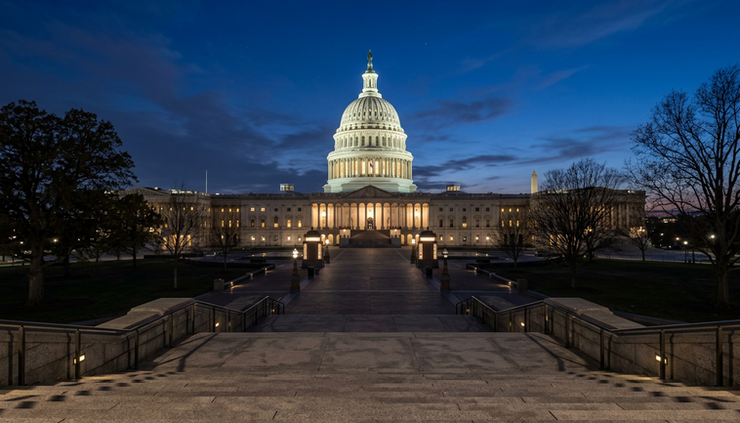
The election sent a message that should not be ignored
The 2026 midterm results were not simply a Democratic victory. They were a warning. A large share of the country rejected the direction in which this administration has taken the nation.
That rejection was not only about party labels. It was about conduct. It was about whether the government serves the public or shields itself from scrutiny. It was about whether power answers to the people or tries to silence their representatives.
Republican losses did not happen in a vacuum. Voters saw an administration that too often treated criticism as disloyalty, oversight as harassment, and accountability as an attack. When elected officials act as though legal limits are optional, voters notice.
What connects elections, accountability, Congress, the White House, Republicans, Democrats, and the Constitution is a basic democratic promise: power must answer to the public.
That promise does not expire when the polls close. If anything, it becomes more urgent afterward.
The new Congress has a duty to respond to what voters demanded. That means serious oversight, not political theater. It means using committees, subpoenas, hearings, document requests, inspectors general, and public reporting to find out what happened, who made decisions, where money went, and whether laws were followed.
The White House may dislike that. Any administration under investigation dislikes it. Discomfort does not make oversight criminal.
Congress does not need White House permission to investigate
The Constitution separates power for a reason. Congress writes laws, controls federal spending, and has the authority to investigate whether the executive branch is carrying out the law faithfully.
That authority is not decorative. It is part of the system.
Congress cannot legislate responsibly if it cannot gather facts. It cannot fund agencies responsibly if it cannot examine spending. It cannot protect the public if it cannot uncover abuse, misconduct, waste, fraud, or violations of federal law.
Congressional investigations have long been part of American government. They have been used by both parties. Republicans have investigated Democratic administrations. Democrats have investigated Republican administrations. Presidents from both parties have complained. That is normal.
What is not normal is treating legitimate oversight as criminal conduct simply because it threatens the president politically.
The president does not get to decide whether Congress may investigate the executive branch. The occupant of the Oval Office does not get veto power over oversight. The White House can assert legal arguments. It can challenge subpoenas in court. It can claim privilege in specific circumstances. Those disputes have processes.
But threats of criminal prosecution aimed at discouraging Congress from investigating are different. They strike at the independence of a coequal branch of government.
The executive branch enforces the law. It does not own the law.
Oversight has rules, and Democrats must follow them
Defending congressional oversight does not mean defending every possible investigation. Congress has power, and power must be used carefully.
Democrats should conduct legitimate investigations. That means they should be disciplined, evidence-driven, and focused on matters within Congress’s constitutional role.
Proper investigations should examine issues such as:
Possible misconduct by officials
Government spending and contracting
Abuse of authority
Compliance with federal law
Interference with agencies, inspectors general, or law enforcement
The use of public office for private or political advantage
Failures that affected public safety, national security, or civil rights
That is a real oversight agenda. It does not require exaggeration. It does not require personal spectacle. It requires facts.
Congress should issue clear requests. Committees should explain the legislative purpose behind their inquiries. Witnesses should be treated fairly. Evidence should be handled responsibly. When disputes arise, Congress should use established legal channels.
That approach matters for two reasons.
First, the public deserves investigations that produce truth, not noise. Voters did not send representatives to Washington to perform outrage. They sent them to protect the country.
Second, legitimate oversight is harder to attack. If the White House wants to claim that investigations are criminal, Congress should make that claim look exactly as weak as it is. The best defense is serious work.
Threats against oversight threaten the separation of powers
There is a dangerous idea beneath the White House’s posture. It is the idea that an administration may decide which investigations are acceptable and which investigators should be punished.
That idea is incompatible with the Constitution.
The separation of powers is not a slogan. It is the structure that keeps any one branch from becoming too powerful. Congress checks the president. The courts check both. The president enforces laws passed by Congress and is accountable to legal limits.
When a president suggests that congressional investigators may face criminal exposure for doing oversight, the threat does not affect only Democrats. It affects the office of Congress itself.
Today, the target may be Democratic committee chairs. Tomorrow, it could be Republican lawmakers investigating a different administration. Once the executive branch claims the power to intimidate oversight out of existence, every future Congress becomes weaker.
That is why this issue should concern people across party lines.
A president who respects the Constitution can object to an investigation. A president can call it unfair. A president can defend the administration’s record. A president can go to court.
A president cannot turn oversight into a crime by saying so.

The counterargument deserves an answer
Some will say congressional investigations can become partisan. That is true. Both parties have launched investigations that critics considered political.
That concern should be taken seriously. Oversight can be abused when lawmakers chase headlines rather than facts. It can become unfair when witnesses are treated as props. It can lose public trust when conclusions are written before evidence is gathered.
But the possibility of abuse does not erase the power itself.
The answer to bad oversight is not presidential intimidation. The answer is better oversight, court review when needed, public scrutiny, and voters holding lawmakers responsible.
If Congress exceeds its authority, there are remedies. Courts can limit subpoenas. Witnesses can raise constitutional claims. Executive privilege can be asserted in proper cases. The public can judge whether an investigation is serious or cynical.
Those checks already exist.
What should not exist is an executive branch warning Congress that investigating the administration may itself be criminal. That flips accountability upside down. It makes the subject of the investigation the judge of whether the investigation may proceed.
No honest system of checks and balances can survive that.
Accountability is not optional after an election
Elections decide who holds office. They do not erase the need for accountability.
A president does not become immune from scrutiny because his party lost seats. An administration does not get a grace period from oversight because investigations may be politically inconvenient. Public officials do not get to demand trust while resisting transparency.
The American people have every right to know what their government has done in their name and with their money.
They have a right to know whether agencies followed the law. They have a right to know whether officials abused power. They have a right to know whether public funds were misused. They have a right to know whether the administration tried to place itself above legal limits.
That is not revenge. That is representative government.
Congressional oversight can be uncomfortable, especially for those being investigated. It can expose failures. It can embarrass powerful people. It can lead to reforms, resignations, referrals, or new laws.
That is exactly why it exists.
A government that cannot be questioned is not accountable. A president who cannot be investigated is not a president under the Constitution. That is something far closer to unchecked power.
Nobody is above the law
The principle is simple, and it applies to everyone.
Nobody is above the law. Not Congress. Not the White House. Nobody.
If members of Congress break the law, they should be held accountable. If witnesses lie under oath, they should face consequences. If investigators fabricate evidence or violate rights, that should be addressed. The rule of law binds all sides.
The same standard applies to the executive branch. If the White House abuses power, obstructs lawful oversight, misuses federal agencies, or threatens people to prevent testimony or cooperation, that conduct deserves scrutiny. Depending on the facts, some conduct may raise serious legal concerns. It should never be brushed aside because the president finds oversight inconvenient.
This is where the country must be clear.
Congress is not a subordinate department of the White House. It is a separate branch of government. Its members take an oath to the Constitution, not to the president. Their duty is to the people.
The election results made one thing resoundingly clear: Americans want accountability, transparency, and respect for constitutional limits.
If the White House still has not received that message, Congress must deliver it through lawful, serious, and persistent oversight.
The election is over. The work of accountability is just beginning.
Comments